
Criminal Court Cases in St. Lucie County
The St. Lucie Clerk of Circuit Court and Comptroller keeps both felony and lower-level criminal files. Circuit Court in the Nineteenth Judicial Circuit hears felonies. County Court hears misdemeanors and criminal traffic charges. The circuit spans four counties, yet each clerk holds its own local files. A St. Lucie County criminal case search therefore belongs in the St. Lucie Clerk system even when the judge serves the wider circuit.
The case file answers a different question from an arrest entry. It records the formal information or indictment, arraignment, motions, plea or trial result, disposition, and sentence. Booking allegations may be cut, changed, or not filed after State Attorney review. Read every count and its outcome instead of treating the arrest charge as the final court charge. The broader St. Lucie County criminal history overview explains how court, Sheriff, and FDLE files connect.
St. Lucie Court Case Codes
Three short division codes help route a St. Lucie County court case lookup. CF identifies criminal felony files in Circuit Court. MM identifies misdemeanor files in County Court. CT identifies criminal traffic matters in County Court. A local number normally combines a year, the two-letter division, a sequence, and a party suffix. The code identifies the file division, not guilt or the final result.
- Nolle prosequi
- The State Attorney filed a decision not to continue a charge.
- No information
- The prosecutor declined to file the expected formal charge.
- Adjudication withheld
- The court withheld a formal adjudication while imposing lawful sanctions; this is not a dismissal.
- Disposition
- The result recorded for a count or the case.
St. Lucie County Case Record Searches
Use the official St. Lucie Court Case Search for most local files dating to 1993. A name works when the number is unknown; a full case number gives the cleanest match. Registration is not needed for an ordinary public search. An electronic-access account adds search capability and public-access mail-merge downloads, but it does not remove legal access limits.
| Field | Use | Search note |
|---|---|---|
| Search Type | Name or case number | Choose one method |
| Last Name | Primary name field | Partial or common names may return many people |
| First / Middle Name | Narrow results | Useful for common names |
| Case Number | Exact file | Use year, division, sequence, and suffix |
| Court / Case Type | Filter | CF, MM, or CT |
| Date Range | Filter | Helps separate similar identities |
Compare date of birth or other lawful identifiers when available, since a name alone can point to the wrong person. Open the case and inspect parties, filing date, judge, charges, docket events, and status before relying on a match.
Today’s St. Lucie Court Docket
The Clerk’s Today’s Docket answers the immediate question: when and where is a hearing set? Its one search box accepts a name, case number, or judge. Results can show defendant, plaintiff, case number, start time, location, case type, event type, judge, and lawyers. This schedule complements the main case file. It is not a full history and can change.
The official source below shows the daily docket interface and its result columns.
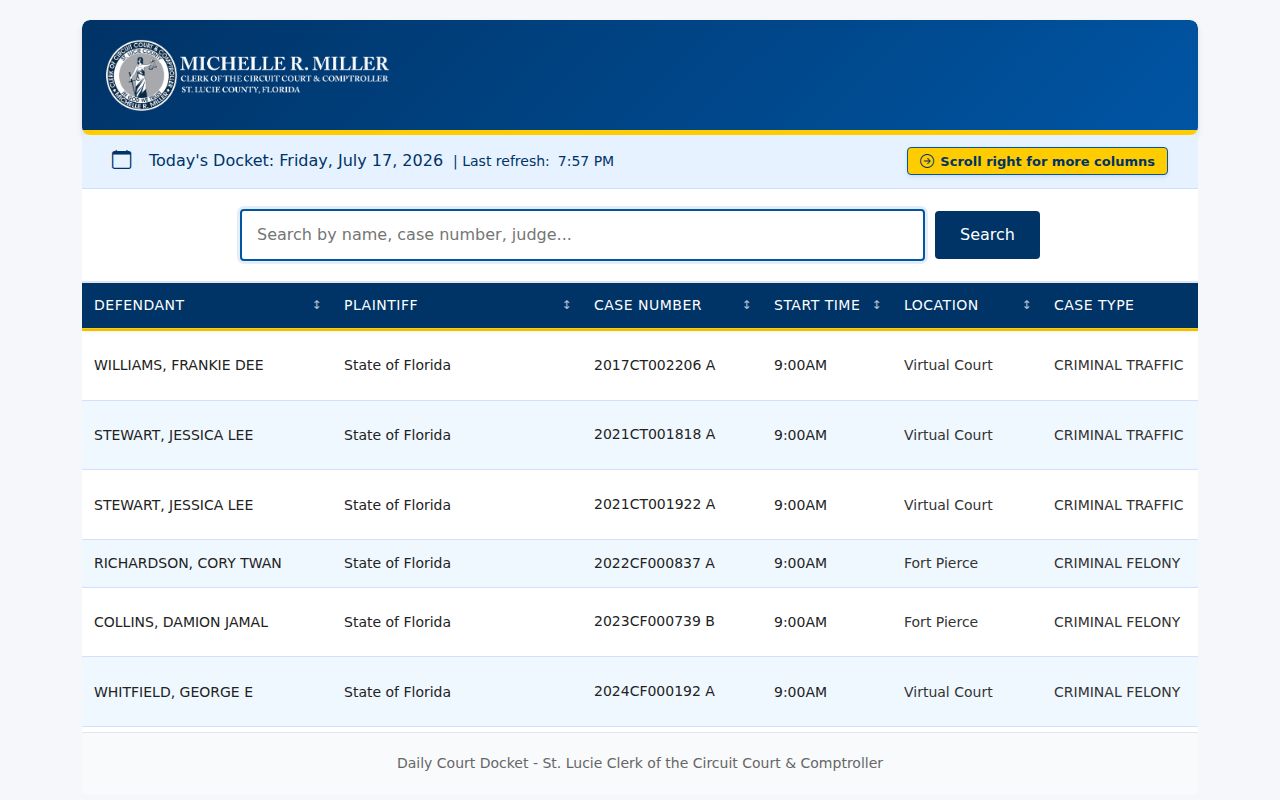
Use the live location field because a St. Lucie County hearing may be in downtown Fort Pierce, at St. Lucie West, or in a virtual courtroom.
What a Criminal Case File Contains
A public St. Lucie County criminal case file is a timeline built from clerk entries and filed records. Images appear only when anonymous electronic access is allowed. The docket may still show that a filing exists even when its image is blocked. Count-level detail matters because one case can end with different results on different charges.
| Case Header | Case number, division, filing date, court, status, and judge |
|---|---|
| Parties | Defendant, State of Florida, and listed lawyers |
| Charges | Count, description, statute, degree, filing decision, and result |
| Docket Entries | Hearings, motions, pleas, trial, warrants or capias activity, and orders |
| Financial Record | Assessments, costs, payments, or balance when posted |
| Sentence | Custody, credit, probation or community control, fines, and count result |
| Future Settings | Date, time, event, courtroom or virtual location, and judge |
Two St. Lucie Hearing Locations
The St. Lucie County Courthouse and Courthouse Addition are at 218 S. Second Street, Fort Pierce, Florida 34950. The Clerk’s main line is 772-462-6900. The St. Lucie West Annex is at 250 NW Country Club Drive, Port St. Lucie, Florida 34986; Court Administration lists Suite 217 and 772-807-4370. Both may host assigned court work.
Fort Pierce Courthouse
Primary Clerk counter and felony, misdemeanor, and criminal traffic case files.
St. Lucie West Annex
Assigned circuit and county hearings; verify the room and site on the current docket.
A web result is not a reason to guess which building to visit. Confirm the location, accessibility needs, and security rules with the current docket or Court Administration before travel.
Criminal Case Stages in St. Lucie County
A local prosecution may start with arrest or a notice to appear. A jailed defendant receives a first appearance, where the judge reviews detention, probable cause, release, and counsel. The State Attorney then screens the allegations and may file an information, seek an indictment, alter the counts, or file nothing. Arraignment records the plea. Discovery and motions prepare the case for a negotiated plea or trial.
Case flow: Charges Filed › Arraignment › Pretrial › Plea or Trial › Disposition › Sentencing
After judgment and sentence, post-judgment motions or an appeal may follow. Each phase leaves a docket trail, though some filings and protected facts remain confidential. A dismissal ends a charge but does not by itself erase the public arrest or court file. Sealing or expunction requires the separate Florida process.
St. Lucie Problem-Solving Courts
The Nineteenth Circuit operates Adult Drug Court, Veterans Treatment Court, and Mental Health Court. These programs combine court oversight with a treatment team. The Circuit lists a coordinator at ProblemSolvingCourts@circuit19.org and 772-807-4388. Eligibility and the effect on a pending file depend on the program, court order, and law.
The Circuit’s 2025 “Your Courts Up Close” session gave St. Lucie residents a close view of these named programs and their local partners. Participation can change the course of a case. It does not automatically seal, expunge, or erase the docket.
St. Lucie Appeals and Federal Files
Florida appellate records move to the Appellate Case Information System, which covers the Supreme Court and six District Courts of Appeal. Appeals from St. Lucie Circuit Court generally go to the Fourth District Court of Appeal. ACIS is not a statewide search for trial-court merits, so begin local trial research with the Clerk and use ACIS only when an appeal exists.
Federal criminal cases from St. Lucie County are filed in the Southern District of Florida and use PACER. The official PACER source below requires registration and generally charges by the page, subject to the judiciary’s current fee rules.
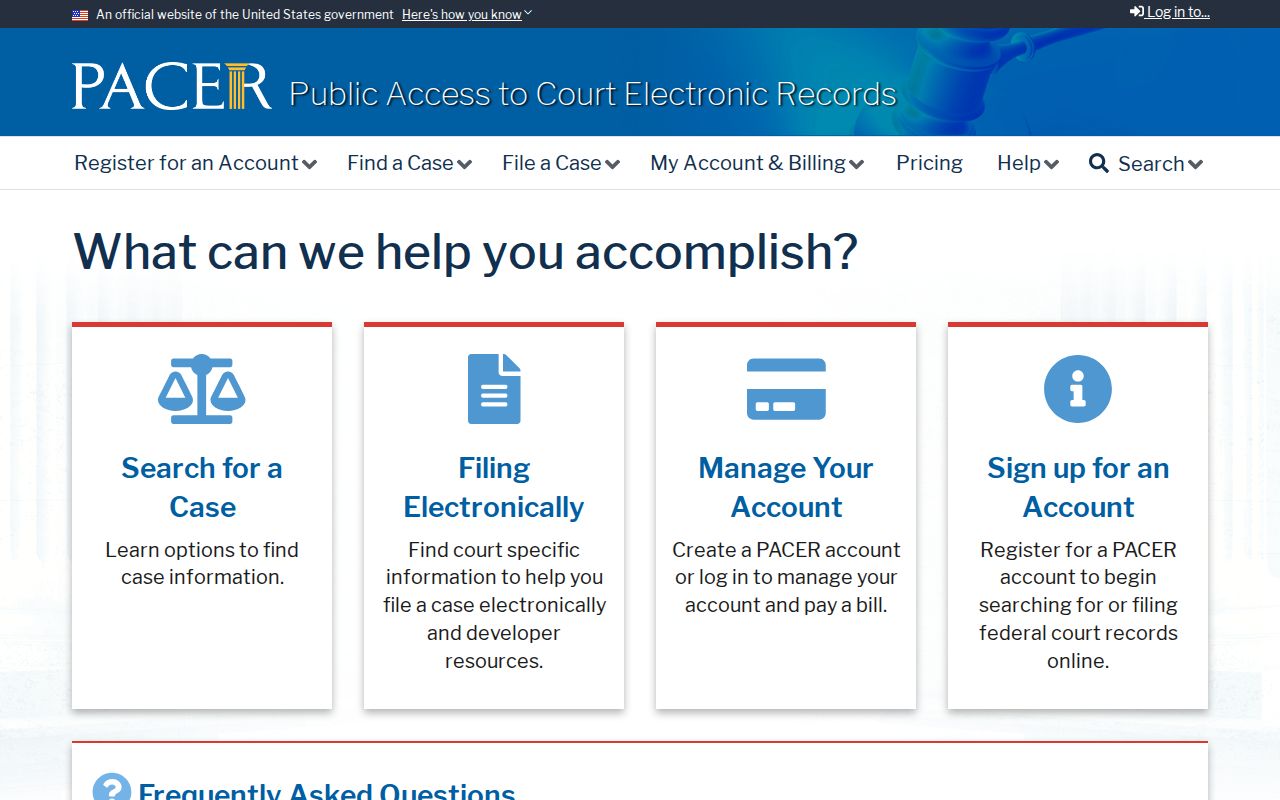
PACER records do not appear as St. Lucie state cases, and the county Clerk cannot supply federal pleadings.
A federal sentence may later lead to the Bureau of Prisons locator, shown in the official source below.
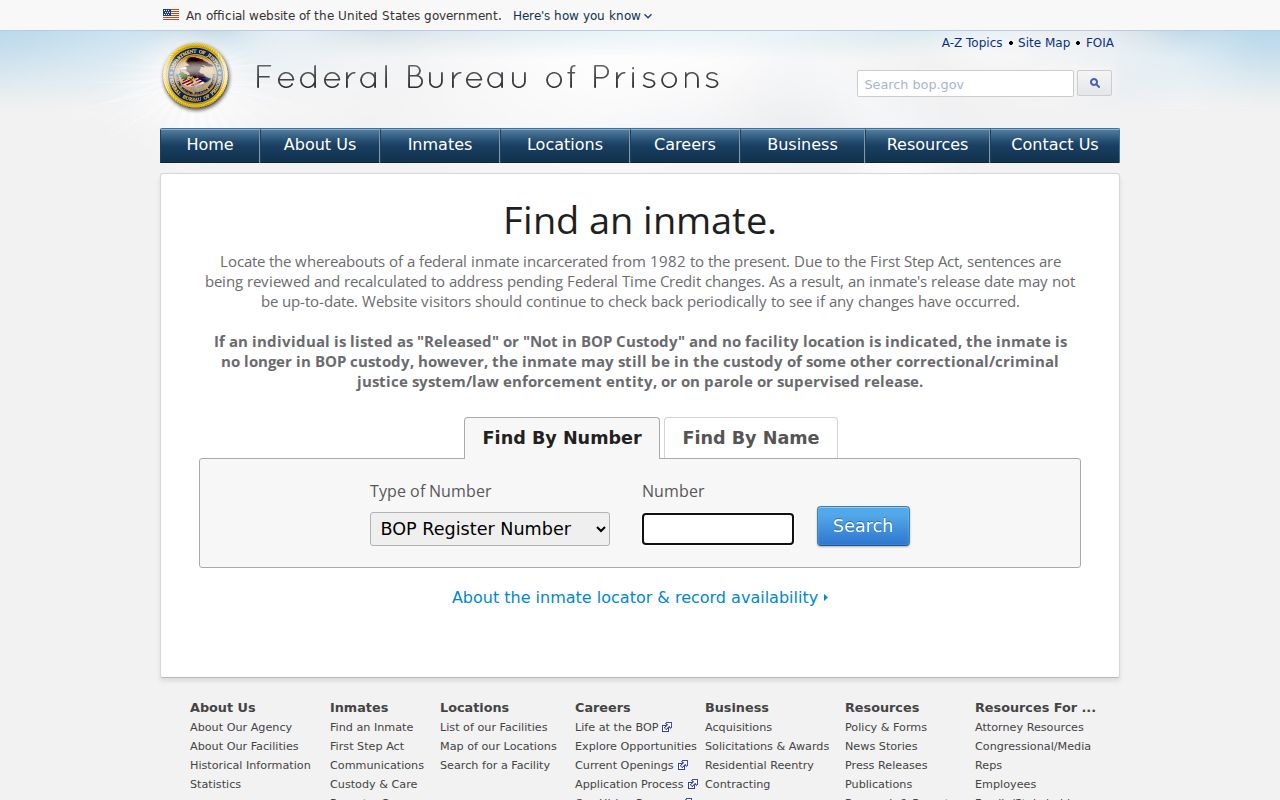
The BOP locator covers federal custody, not the St. Lucie County Jail or Florida state prison system.
Access Rules for Case Records
Florida Rule of General Practice and Judicial Administration 2.420 presumes court records are public except for listed confidential material and sealing orders. Juvenile material, victim data in protected cases, personal identifiers, sealed or expunged files, and some document images are restricted. The electronic-access matrix can give an anonymous web user less than a registered party, lawyer, or courthouse counter may lawfully see.
For a pre-1993 file, a missing image, or a record not online, contact the Clerk Research Department through its official public-records route. State that the request is for an existing case file, give the case number or enough name and date detail to locate it, and request the specific docket entry or certified copy needed. Fees are quoted when applicable. Do not send duplicate requests through several channels.
Record boundary: FDLE’s paid Florida history products summarize reportable arrest and disposition events. They do not replace the St. Lucie Clerk’s count-by-count case file.
The official FDLE page below shows Instant, certified or non-certified, and ORI search choices.
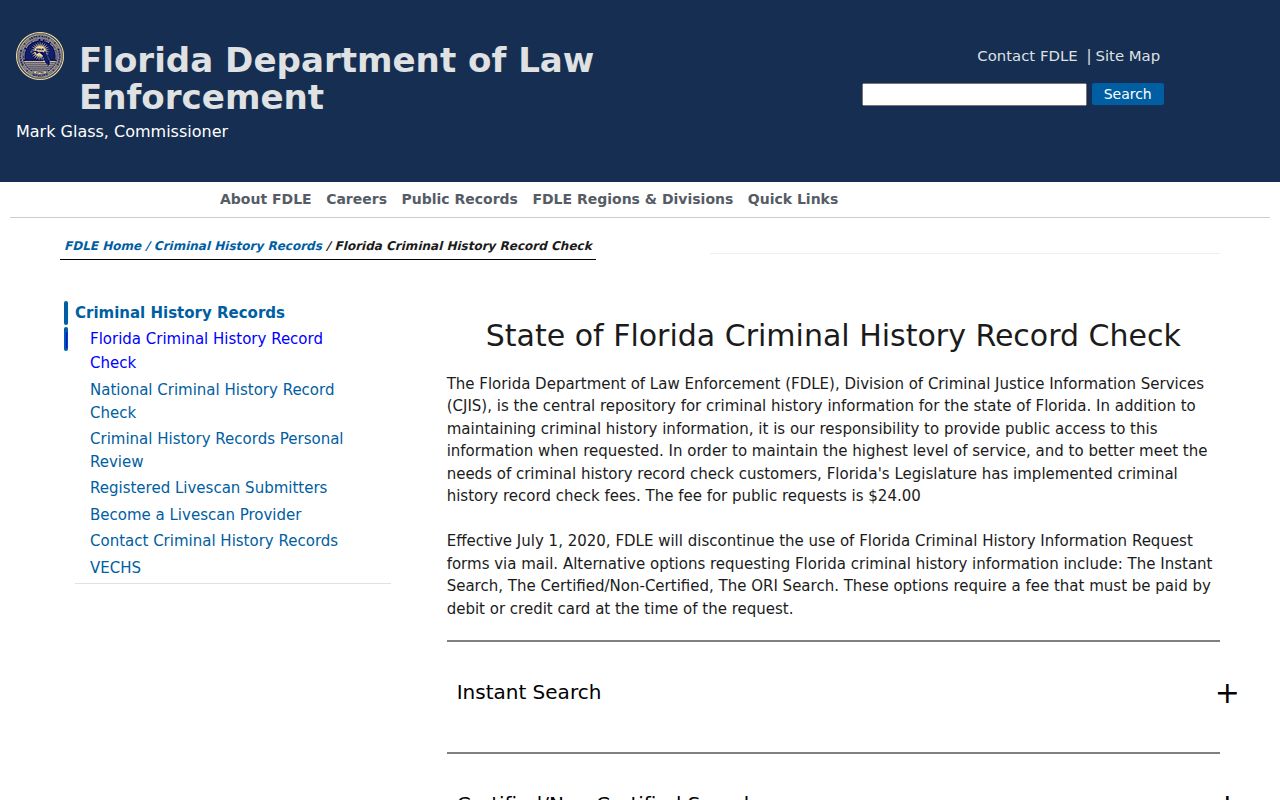
Use FDLE for statewide repository scope, the Clerk for local prosecution detail, and the arresting agency for its police report.
Wrong St. Lucie Court Case Match
A shared name is not enough to identify a defendant. Compare middle name, filing date, division, related dates, and any other lawful identifier in the public file. If the result appears to join the wrong person, save the case number and contact the Clerk rather than asking FDLE or the Sheriff to alter a court docket. The Clerk can explain its correction route. A factual docket error and an accurate file about a different person require different responses.
Pre-1993 St. Lucie Case Records
The online coverage boundary means an empty search can be inconclusive for an older St. Lucie County case. Give the Clerk Research Department the full name, an estimated year, the likely CF, MM, or CT division, and any known case number. Ask for an existing index entry or named document, not a custom history. A counter or archive request may reveal public material that was never scanned. Confidentiality rules still apply, and the Clerk may quote research or copy costs.