
St. Lucie County Sex Offender Checks
The Florida Department of Law Enforcement manages the official Florida Sexual Offenders and Predators Search. It is the main public channel for a St. Lucie County registry search. The Sheriff’s Offender Registration/CID unit supplies a local contact for registration and suspected noncompliance, but the Sheriff routes the public to FDLE for the searchable registry.
Choose the channel by the question. Use FDLE for a Florida profile or a county, city, ZIP, neighborhood, or campus list. Use the Sheriff when a local address or compliance concern needs review. Use the U.S. Department of Justice national system when the person or address may cross state lines. In an emergency, call 911 rather than attempting contact.
St. Lucie Offender Registration Unit
The St. Lucie County Sheriff’s Office lists Offender Registration/CID at 772-462-3465. Its Sex Offender Unit is at 4700 W. Midway Road, Fort Pierce, Florida 34981; the directory number is 772-462-3683 and the Sheriff’s main line is 772-462-7300. These contacts are for registration and law-enforcement follow-up, not for confronting a registrant.
The official Sheriff source below gives the county contact and routes users to FDLE.
Report a suspected wrong address or missed duty with concrete facts. The unit can compare the report with information that is not part of a public profile.
Florida Registry Searches
Open the FDLE registry and choose a name or geographic path. At least one of First Name, Last Name, City, County, or ZIP is required. Partial names are accepted. Names may be left blank when a city, county, or ZIP list is the goal.
- Read and accept the registry conditions of use.
- Enter a full or partial name, or choose St. Lucie County, a city, or a ZIP code.
- Review the result list and compare photo, designation, age, and location clues.
- Open the full profile and read status, address type, offense, and reporting details.
| Field | Type | Requirement | Use |
|---|---|---|---|
| First Name | Text | One name or place field | Full or partial |
| Last Name | Text | One name or place field | Full or partial |
| City | Text / select | One criterion | Blank names return a city list |
| County | Select | One criterion | Select St. Lucie |
| ZIP Code | Text | One criterion | Five-digit query |
| Address / Radius | Text / select | Neighborhood mode | Searches near a location |
FDLE says amendments update the public site in real time. “Real time” describes posting after FDLE receives a change. It does not mean every unreported move is already known.
St. Lucie Neighborhood Radius Search
The neighborhood mode starts with an address and radius. It is useful for community awareness near a home, park, or other place without guessing which city or ZIP boundary controls. Re-read the live radius choices when searching, since the interface options can change.
The official FDLE source below shows the neighborhood and radius interface.
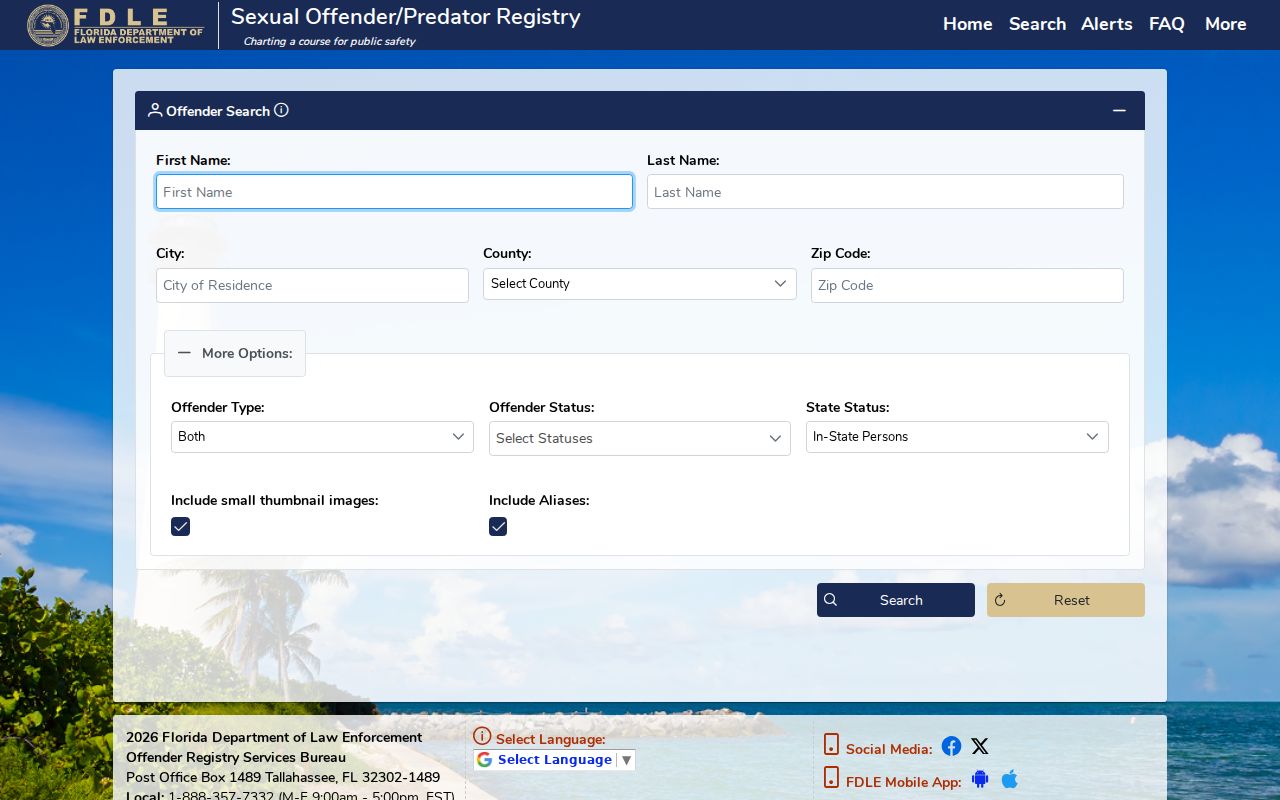
A map pin is a lead, not permission to visit the address. Open the profile to check whether the address is permanent, temporary, or transient and whether the status is current.
Registry Profiles: What They Show
A Florida profile combines identity clues, a public designation, published addresses, and qualifying offense information. Match several fields. Similar names are common, an image may be historic, and a person’s legal address status can be more complex than one map point.
| Name and Aliases | Primary name and other reported names |
|---|---|
| Photo and Description | Current or historic images, age, sex, race, height, weight, hair, and eyes |
| Public Designation | Sexual offender or sexual predator, plus status indicators |
| Published Address | Permanent, temporary, or transient location when law permits, with map |
| Qualifying Offense | Description, statute or jurisdiction, and conviction or adjudication date |
| Other Identifiers | Scars, marks, tattoos, vehicles, and vessels when reported |
| Registration Detail | Reporting county and compliance or status information |
Social Security numbers, fingerprints, and palm prints collected by law are not displayed to the public. Share or print controls do not change the limits on lawful use.
St. Lucie Campus Registry Search
Florida’s registry includes a separate campus-focused interface for higher-education data that registrants must report. This mode is useful when the safety question concerns a college or university rather than a home address. It does not replace a name or county search, because a profile can carry more than one type of reported location.
The official FDLE source below shows the campus-search interface.
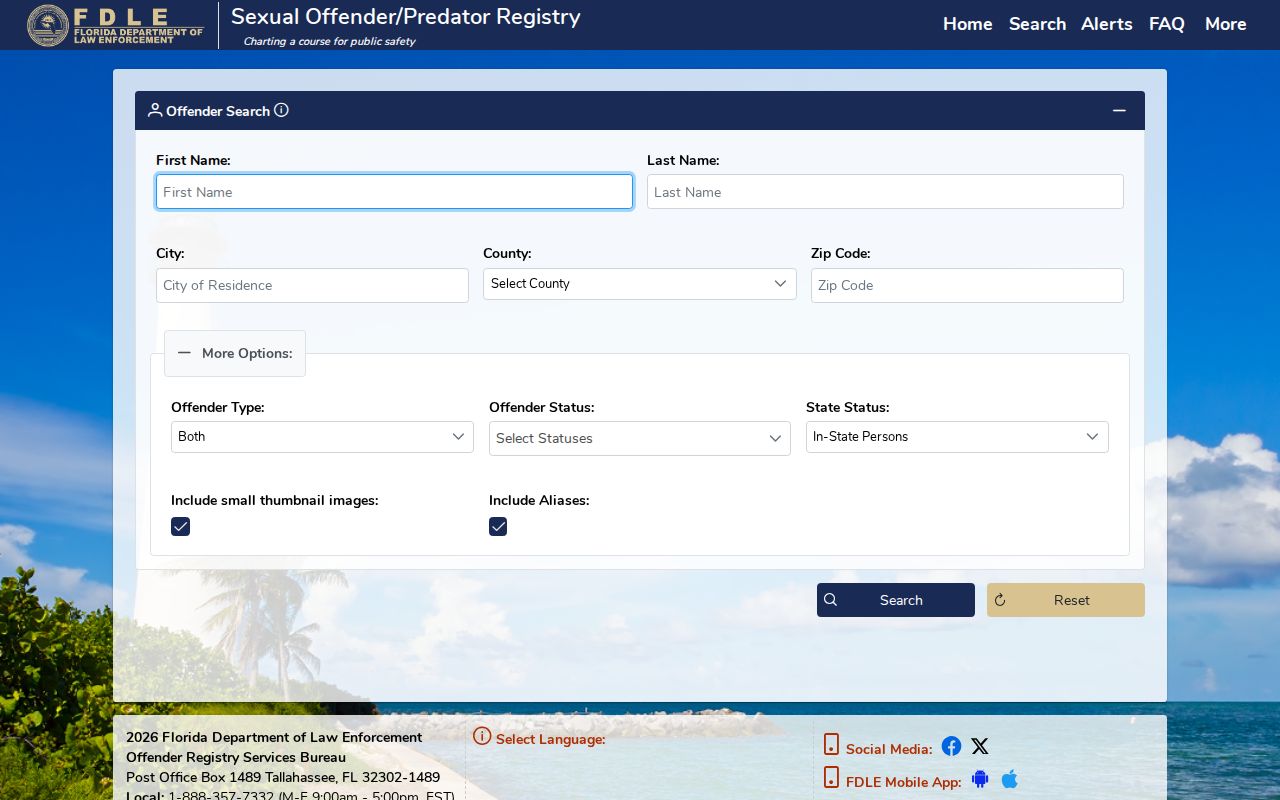
Compare campus results with the full FDLE profile so the designation, status, offense, and other published address data stay in context.
Registration Levels and Duties in Florida
Florida does not label its main public results with the federal Tier I, II, and III scheme. Its principal categories are sexual offender under section 943.0435 and sexual predator under section 775.21. The category rests on Florida statutes, the offense, and in some cases a court designation. Predators carry enhanced sheriff and community-notification duties.
| Florida Category | Public Visibility | Duration and Review |
|---|---|---|
| Sexual offender | Published when statutory rules apply | Generally life; narrow petition route after at least 25 arrest-free years after release or sanction for eligible people |
| Sexual predator | Predator designation and enhanced notification | Generally life, with enhanced sheriff and community duties |
| Special-circumstances removal | Removed only after a qualifying court order | Very narrow criteria under section 943.04354 |
Registration also covers identity, residence, vehicle, internet identifier, conviction, and higher-education facts. Florida law imposes in-person reporting deadlines, including 48-hour duties for major events. Eligibility to petition is narrow and never automatic merely because many years have passed.
FDLE and National Registry Results
FDLE gives the richer Florida record and local search modes. The National Sex Offender Public Website searches participating state, territorial, and tribal registries through one federal doorway. Use NSOPW when a name, trip, move, or address crosses state boundaries, then follow its result back to the registry that owns the data.
The official national source below shows the cross-state search.
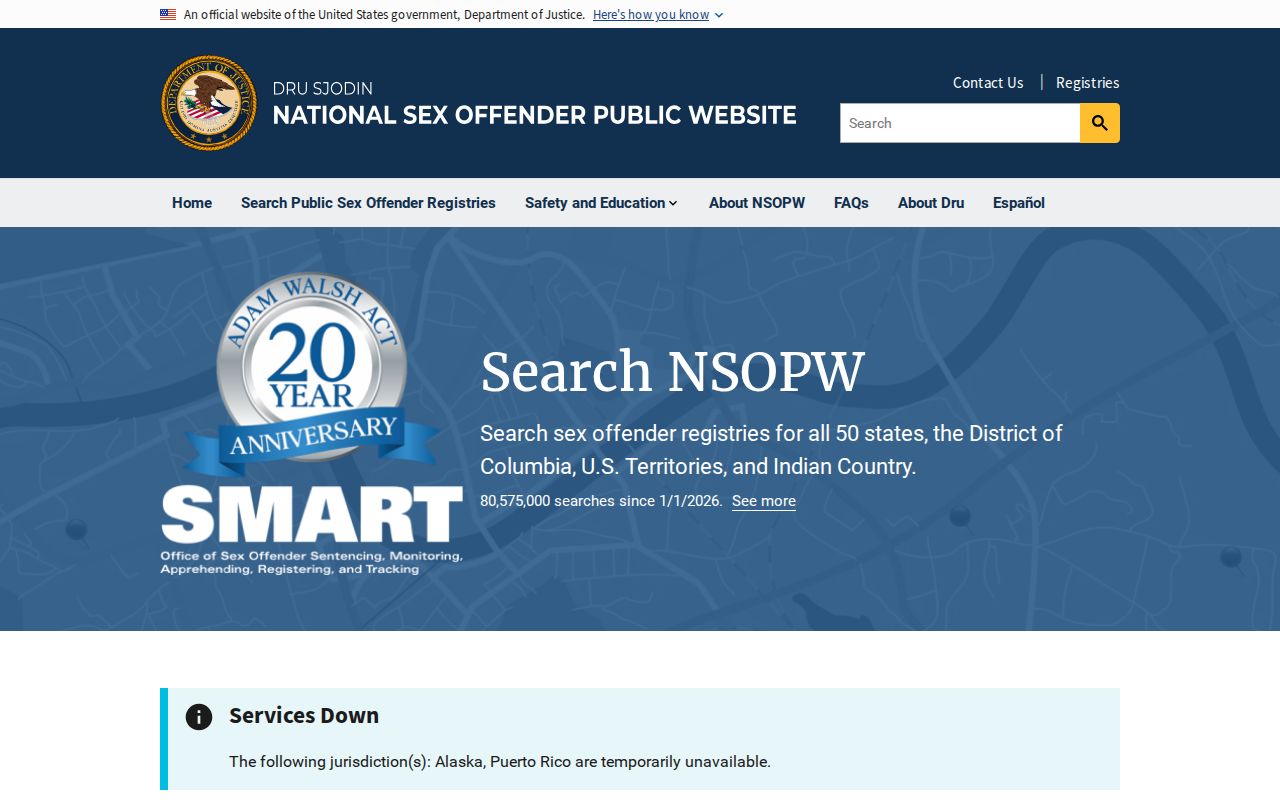
A no-result response from one system is not proof that no registration exists elsewhere. Check spelling, aliases, and the relevant state source.
Wrong St. Lucie Registry Address
Do not investigate an apparent mismatch in person. Save the public profile link, note the address or status that seems wrong, and record what was observed without trespassing or surveillance. Call St. Lucie Offender Registration/CID at 772-462-3465. Give the unit facts it can check. Use 911 only for an emergency.
An old photo, a transient address, or a recent change can explain some confusion. Law enforcement can review registration records and statutory deadlines that the public profile does not fully show. Public reporting is the safe path; online accusations and direct contact can harm others and impede a real inquiry.
Using Registry Information Lawfully
Registry data exists for awareness and safety planning. It may help a family understand published conditions near an address, recognize a listed person, or send a good-faith compliance concern to law enforcement. It does not prove a new crime, predict conduct, or grant anyone power to police a registrant or household.
Use without confrontation: Florida registry warnings prohibit using the information to injure, harass, or commit a crime against a registrant or family member. Misuse can lead to criminal penalties.
Keep safety steps calm and lawful. Verify a profile through FDLE, use the Sheriff’s published unit for a local concern, and call emergency services for an immediate threat. Never post private details about neighbors, enter property, threaten a listed person, or treat a map as a command to act.
St. Lucie Offender Name Searches
Start broad when spelling is uncertain. FDLE accepts partial first and last names, which can expose aliases or close variants that an exact search misses. Then narrow the list with the photo, age, designation, and published location. Never select a profile from name alone. When a name search stays unclear, a St. Lucie County geographic list offers a second route without inventing a spelling.
St. Lucie County Registry Lists
FDLE also publishes a public CSV for county or statewide data. A list can help with careful research across many St. Lucie County entries, but the live profile remains the better source for current detail, warnings, maps, images, and reporting links. Check the profile before relying on a downloaded row because registry amendments can occur after a file was saved.
St. Lucie Offender and Predator Labels
Sexual offender and sexual predator are legal Florida categories, not casual descriptions. The qualifying statute and court history control the designation. A predator profile carries enhanced notification duties, while an offender profile follows section 943.0435 publication rules. Neither label should be replaced with a guessed federal tier. Read the designation shown by FDLE and the listed qualifying offense.
St. Lucie Registry Identity Clues
Vehicles, vessels, tattoos, scars, aliases, and historic images can help distinguish people with similar names. These fields are identity clues, not signs of present wrongdoing. Compare several details and note when the profile says a vehicle or image is historic. If a public field appears wrong, report the mismatch to the Sheriff’s unit and let law enforcement check the underlying record.
St. Lucie Registry Update Limits
FDLE states that amendments post to the public site in real time, but the system can publish only changes it has received. A move may trigger a statutory reporting deadline before the new fact reaches the display. That gap is why a concrete local concern belongs with Offender Registration/CID. The safe response is a factual report, not a visit, online accusation, or neighborhood confrontation.