
St. Lucie Village Criminal History Checks
Begin with the St. Lucie County Sheriff when a deputy handled the incident. Use the county jail search for a booking, the Clerk for a filed charge and outcome, and FDLE for a Florida-wide public history. Village government handles municipal records such as ordinances and meetings, not county criminal-justice files.
- Ask whether the incident was handled by a Sheriff deputy.
- Request the deputy report through the Sheriff Public Records Request portal.
- Search the county jail for custody or a recent release.
- Search the Clerk for prosecution, hearings, and disposition.
- Use FDLE for statewide repository information.
Records for St. Lucie Village Incidents
No comparable St. Lucie Village police-records unit or full-service criminal portal was identified. Deputy-created reports belong to the St. Lucie County Sheriff. Its headquarters is 4700 W. Midway Road, Fort Pierce, and its records custodian number is 772-462-3299.
A Sheriff request should name the incident, date range, location, involved party, report number if known, and desired existing format. Village requests should use the municipal government contact and describe the local record with the same care, but criminal material must be routed to its creating county office.
Why St. Lucie Village Uses County Records
The village had 613 residents at the 2020 Census and does not publish a police database comparable to Port St. Lucie or Fort Pierce. County scale makes the Sheriff, jail, and Clerk the working criminal-record system for local incidents.
The official village government page remains useful for municipal contacts, ordinances, and meeting material.
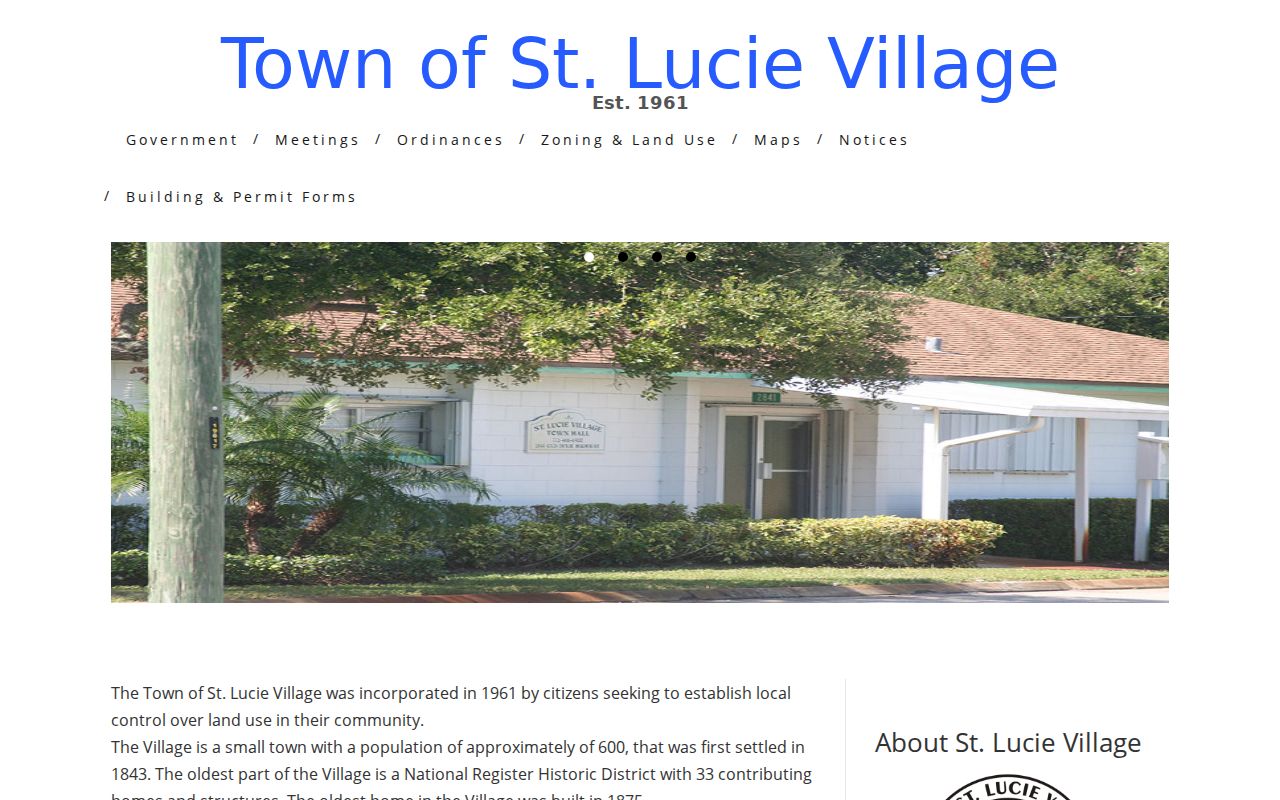
The image reflects the municipal source, while county offices retain the criminal-justice files.
Booking and Arrest Records in St. Lucie Village
St. Lucie Village has no village jail. A person arrested after a deputy contact is booked into the St. Lucie County Jail at 900 N. Rock Road. The official inmate search covers current custody, while the release report covers the recent five-day window.
Older Daily Arrest Reports move to the Sheriff Archive Center. A booking record is not a conviction. Search the Clerk docket to learn whether prosecutors filed a charge and how the court resolved it.
No St. Lucie Village Jail
A village location does not create village custody records. Follow an arrest to Rock Road, where the county jail creates intake identifiers, listed charges, bond, custody status, and release information. The jail switchboard is 772-462-3450.
If the live search is empty, check the official five-day release report and then the Daily Arrest Report archive. Spelling, release timing, and processing can affect visibility. A deputy report may still exist even when no booking appears.
The St. Lucie Village Municipal Court File
Incorporated status does not give St. Lucie Village its own criminal trial court. County Court hears misdemeanors and criminal traffic. Circuit Court hears felonies. The St. Lucie Clerk provides the public case search, daily docket, counter access, and research-request route.
| Court Name | No independent village criminal court; county trial courts apply |
|---|---|
| Case Types Heard | County Court misdemeanors and criminal traffic; Circuit Court felonies |
| Case Lookup Channel | St. Lucie Clerk Court Case Search or Research Department |
| What the Docket Shows | Charges, events, public documents, disposition, sentence, and settings |
| Copies & Fees | Confirm current copy format and cost with the Clerk |
St. Lucie Village Clerk Search
The Clerk Court Case Search covers most cases dating to 1993. Start with a name when the case number is unknown, then narrow with middle name, case type, or date. A case number gives the cleanest match.
The file can show parties, counts, statutes, events, public documents, costs, disposition, sentence, and future settings. Restricted images, protected data, and older files may require a Clerk Research Department request.
How St. Lucie Village Records Reach the County
A deputy report remains with the Sheriff. Jail intake adds custody, listed charges, bond, and fingerprints. The State Attorney chooses any filed charge, the Clerk records the prosecution, and qualifying events return to FDLE.
Record flow: St. Lucie Village PD › St. Lucie County Courts › Florida Department of Law Enforcement
The Sheriff is the first stop for a recent village incident. The Clerk is the source for the later court result. FDLE is useful for Florida-wide scope but does not replace either local file.
Village Record, Sheriff Record, or Clerk Record
Ask what the document records. A village ordinance or meeting record belongs with village government. A deputy narrative or arrest report belongs with the Sheriff. Booking facts belong with the jail. A filed charge and disposition belong with the Clerk.
| Question | Start here |
|---|---|
| What did the deputy report? | Sheriff records portal |
| Was someone booked? | County jail search |
| How did the case end? | St. Lucie Clerk |
| Is there Florida-wide history? | FDLE CCHInet |
When St. Lucie Village Lacks the Report
Do not ask village staff to create a document or retrieve a county file they do not maintain. Identify the responding agency from the event details. Then send a focused request to the Sheriff with the date, location, involved party, incident number if known, and desired format.
If no report can be found, confirm the address and agency. Florida Highway Patrol or another law-enforcement body may have handled an event near village limits. The custodian must be the office that created or received the record.
St. Lucie Village Arrest Timeline
A deputy first creates the incident record. If an arrest follows, Rock Road intake creates the booking and sends fingerprint-supported event data into Florida’s criminal-justice network. The State Attorney then makes a filing decision.
The Clerk opens a case for filed charges and records later events and dispositions. FDLE receives qualifying information from agencies and courts. Delays or identity mismatches can leave a state event without a linked final disposition, which is why the Clerk file remains important.
Older St. Lucie Village Arrest Records
The jail’s live window is not a full historical index. For an older incident, search the Sheriff Archive Center and select the Daily Arrest Reports collection. Use keywords or a date range. The report may help establish when the person was booked and under what initial allegation.
Next search the Clerk because the prosecution can differ from the booking. Terms such as no information, nolle prosequi, dismissal, adjudication withheld, and adjudicated guilty describe different outcomes. If an older case is not online, ask the Clerk Research Department to search its retained records rather than assuming the case never existed.
St. Lucie Village Statewide Records
FDLE CCHInet is the public Florida repository search. It uses demographic information and costs $24, with an added $1 card-processing charge for Instant Search. That result is broader than a St. Lucie Village or county search, but it is not the full police narrative or court pleading file.
A person reviewing their own state history for accuracy can use FDLE’s separate free Personal Review. That process requires fingerprints taken by a law-enforcement or criminal-justice agency and a mailed form. Use the Clerk result to investigate a local disposition, since reporting delay or an identifier mismatch can keep a final outcome from linking cleanly to an arrest cycle.
Confirming St. Lucie Village Record Matches
Use more than a name when comparing results. A middle name, date of birth, report number, booking date, case number, and incident location can separate people with similar names. Repository and jail entries summarize events, so confirm the exact St. Lucie Village matter with its creating office.
If the records disagree, note which field conflicts and contact that custodian. The Sheriff can address its report or booking data, the Clerk can address the docket, and FDLE provides a personal-review challenge route for the subject’s state history.
St. Lucie Village Record Access Rules
Florida law begins with broad public access, but agencies must protect sealed and expunged cases, juvenile information, confidential identifiers, protected victim data, and active investigative material when an exemption applies.
Key Statutes:
Florida Public Records Law - Florida law balances public access with specific confidentiality exemptions..
Florida Code § 119 - Florida law balances public access with specific confidentiality exemptions..
Florida Code § 119 - Florida law balances public access with specific confidentiality exemptions..